

Economia 5.0 · NOTA-ECO-040
Il ritorno petrolifero del Venezuela: non è un boom, è un riavvio
Di Carlos J. Pérez Pulido · ISHEA Institute ·
Un aumento del 25% della produzione petrolifera venezuelana appare notevole sulla carta. Il pezzo pone la domanda più scomoda: non quanto sia cresciuta, ma perché, e cosa riveli sul paese.
Nota divulgativa — Testo breve pubblicato in aperto. Pensiero in corso, non risultato.
Opera originale in inglese.
Venezuela’s Oil Comeback: It’s not a boom. It’s a restart.
The recent ~25% increase in Venezuela’s oil production looks impressive on paper.
But the key question is not how much it grew — it’s why it grew.
Because the evidence points to something very different from a structural expansion.
This is not a wave of new capacity.
It is a system coming back online.
Three forces explain most of the rebound:
🔄 Reactivation of shut-in production
Idle wells and previously constrained fields being restarted.
🚢 Logistics unblocking
Storage constraints and export bottlenecks easing, allowing crude to actually leave the system.
🧪 Commercial normalization
Improved access to diluents and export channels enabling heavy crude to move again.
⚙️ Targeted operational support
Selective rehabilitation of existing infrastructure (including JV activity with international operators).
The distinction is critical:
Recovering suppressed capacity is not the same as creating new capacity.
One can happen in months.
The other takes years and billions in sustained investment.
So what we are seeing is not a structural oil boom.
It is an operational rebound of a stressed system returning toward equilibrium.
And that raises the real question:
👉 How much of this recovery is actually sustainable once the “idle capacity” is fully exhausted?
Because after the restart phase… growth becomes much harder.
#Venezuela #OilMarkets #Energy #OPEC #Macroeconomics #Geopolitics #EnergyTransition
Nella stessa sala — Economia 5.0

NOTA-ECO-001 · Economia 5.0
E se le variabili con cui misuriamo il successo dei Paesi fossero del tutto capovolte?
Da decenni il progresso si misura con PIL, produttività, crescita ed energia. Questo testo sostiene che quelle variabili potrebbero essere capovolte e invita a ripensare che cosa significhi, per un Paese, prosperare.
NOTA-ECO-002 · Economia 5.0
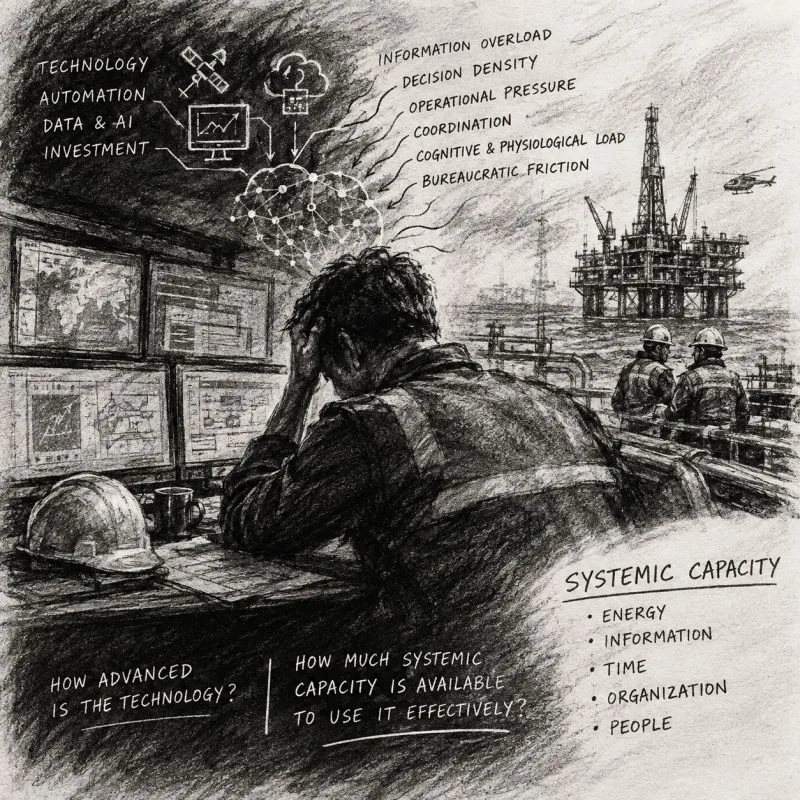
Perché l’alta ingegneria sbaglia proprio quando la tecnologia è più avanzata?
Nell’Oil & Gas e in altre operazioni complesse, più tecnologia non garantisce decisioni migliori: questo testo indaga la capacità sistemica, quanto un sistema sa assorbire e tradurre in azione sotto pressione.

NOTA-ECO-003 · Economia 5.0
Frankenstein e il petrolio: perché il Venezuela torna a contare nella geopolitica?
Terza puntata della serie: dopo il passaggio dal capitale all'IA e alla concentrazione finanziaria, emerge il nuovo collo di bottiglia, il petrolio, e con esso il Venezuela torna sullo scacchiere geopolitico.