

Economy 5.0 · NOTA-ECO-097
Transition and Time: The Keys to Venezuela's Process
By Carlos J. Pérez Pulido · ISHEA Institute ·
Two forces govern Venezuela today: transition and time. This piece separates them to explain why reading the process without them turns political change into a matter of guesswork.
Note — Short piece published openly. Thinking in progress, not a result.
🔑 Transition and Time: The Keys to Venezuela’s Process
Today in Venezuela, two forces shape everything: transition and time
Understanding them isn’t optional—it’s the difference between seeing collapse as an end…or as a phase of systemic reorganization.
🔄 What Is Transition?
Transition is the movement from one state to another.
It doesn’t happen instantly, but through a gradual transformation—where a system sheds one form to reorganize into another.
This is universal:
⚡ Energy transition: energy transforms; it isn’t destroyed.
🌱 Ecological transition: ecosystems recycle matter and energy in interconnected cycles.
🧠 Complex systems: every transition sends ripples—cascading effects that unfold over time.
Intervening without understanding these cycles deepens harm instead of healing it.
🐛 The Caterpillar Metaphor: Cycles, Time, and Perspective
The caterpillar consumes until it becomes a chrysalis.
From the outside, it looks like destruction.
From within, it’s preparation.
Then the butterfly emerges 🦋—
pollinating, regenerating, restoring balance.
Even the chrysalis leaves something behind: silk.
Each phase has its own rhythm. The full cycle is their sum.
And as Einstein reminded us: "time is relative to the observer"⏳.
🔁 Time as Cycles—Not a Straight Line
Seeing time as cycles—not a rigid line—builds resilience.
Every actor lives in a different time:
🐛 For the caterpillar: growth and consumption.
🌿 For the plants: crisis—and unwitting contribution to renewal.
🦋 For the butterfly: emergence; the past dissolved into purpose.
👥 For humanity:
— The caterpillar is a plague
— The chrysalis is raw material
— The butterfly is equilibrium
Each perception shapes—and is shaped by—the observer’s place in the cycle.
🧭 Time Is Relative
Time isn’t absolute.
It depends on where you stand—and what’s at stake.
For some, time is eternal.
For others, strategic.
For many, unbearable.
🇻🇪 Venezuela’s Transition: Multiple Views, Multiple Timelines
There is no single way to understand Venezuela’s transition.
It’s never the same to observe it from:
🏛️ Washington
🏢 Miraflores
🚶 The streets of Venezuela.
Even within the opposition, timelines, priorities, and interpretations diverge deeply.
🧠 Conclusion – ISHEA Vision:
Venezuela is in transition. Not as a political slogan—but as a systemic reality.
The real challenge isn’t to force change, but to:
✔️ Recognize which phase of the cycle we’re in
✔️ Respect the natural timing of the process
✔️ Accept that destruction and regeneration can be two faces of the same transformation
The caterpillar, the chrysalis, and the butterfly are not separate beings.
They are one essence in different states.
🦋 This is not the “butterfly effect”—a random ripple in chaos.
This is structural metamorphosis: a deliberate shift in state, born from necessary dissolution.
#ISHEA #ISHEBio #SystemsThinking #VenezuelaPower 🇻🇪 #Resilience
In the same room — Economy 5.0

NOTA-ECO-001 · Economy 5.0
What if the variables we use to measure national success were completely backwards?
For decades, progress has been measured through GDP, productivity, growth and energy use. This piece argues those variables may be inverted and asks us to rethink what it means for a country to thrive.
NOTA-ECO-002 · Economy 5.0
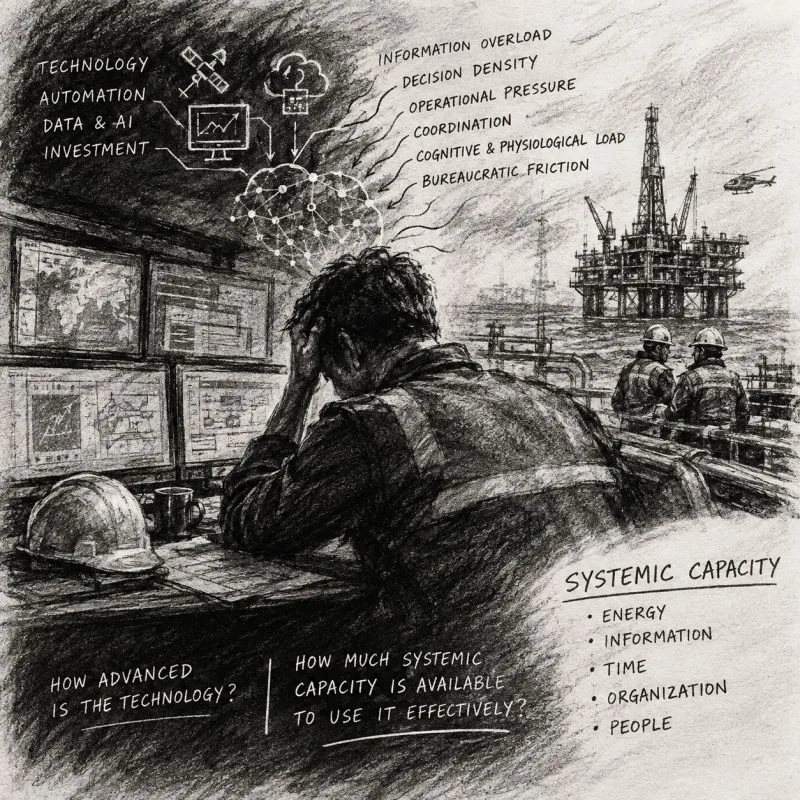
Why do highly engineered systems fail just when technology is most advanced?
In Oil & Gas and other complex operations, more technology does not guarantee better decisions: this piece examines systemic capacity, how much a system can absorb and turn into action under pressure.

NOTA-ECO-003 · Economy 5.0
Frankenstein and Oil: Why Does Venezuela Matter Geopolitically Again?
Third installment of the series: after tracing capital into AI and financial concentration, the next bottleneck comes into view, oil, and with it Venezuela returns to the geopolitical board.