

Collective cognition · NOTA-COG-024
2025 Year-End Insights: Aging, Systems and Energy
By Carlos J. Pérez Pulido · ISHEA Institute ·
A year-end review of the lessons from the conference on aging and human systems, tied to a larger question: how energy organizes old age, cognition and institutions alike.
Note — Short piece published openly. Thinking in progress, not a result.
🌟 2025: Year-End Insights — Aging, Systems & Energy
As 2025 comes to a close, we reflect on key lessons from this year’s conference on aging and human systems, and how they connect with broader principles of energy and system resilience.
1️⃣ Conference Takeaways
Systems—biological, organizational, societal—share universal learning patterns.
Adaptation depends not on activity, but on energetic margin: the surplus energy available after maintaining coherence and stability.
Insights apply to cognition, decision-making, and resilience, providing practical frameworks for human performance.
2️⃣ Energetic Margin & System Resilience
Every system faces an energetic constraint:
In companies: survival consumes energy; innovation requires margin.
In economies/states: full absorption in stability leads to fragility.
In living systems: survival without margin erodes resilience.
Primary systems: survive
Secondary systems: organize
Tertiary systems: adapt and remain coherent under stress
> Activity is not resilience.
Production is not margin.
Systems fail not because they lack instructions, but because they lack energetic margin to execute them coherently.
💡 Reflection for 2025
This year has reinforced that learning, adaptation, and resilience are universal.
The intersection of aging, cognition, and energetic systems shows us how to navigate complexity effectively.
As we enter 2026, the challenge is to strengthen energetic margin—personally, organizationally, and socially—so we can thrive under stress and change.
— ISHEA Lens
— C.J. Pérez Pulido
#CellHealth #EnergyCoherence #ISHEA #ATP #BioInsights #ScienceStorytelling, #Biomarkers #ISHEAbio
In the same room — Collective cognition
NOTA-COG-001 · Collective cognition
PISA 2025: what happens when learning too fast stops being learning?
A reading of the PISA 2025 results and the signal they send about performance across OECD countries: the suspicion that speeding up learning may end up hollowing it out.
NOTA-COG-002 · Collective cognition
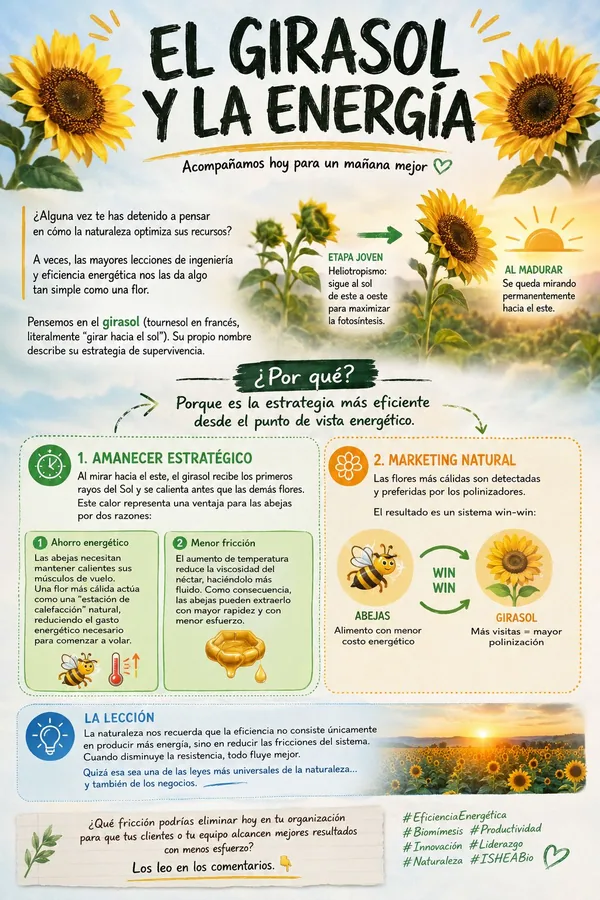
The Sunflower and Energy
How nature optimises its resources: the sunflower turns its geometry into a lesson in engineering and energy efficiency that human technology is still trying to match.
OSF-COG-003 · Collective cognition
ICSD: cognitive state dynamics (in preparation)
A repository in preparation for ICSD, the cognitive state dynamics model; it opens the space where the materials of the EICI + TACC framework will be deposited as the research advances.