

Collective cognition · NOTA-COG-019
Critical Nodes and Strategic Dependency: China's Pattern in Latin America
By Carlos J. Pérez Pulido · ISHEA Institute ·
A reading of Latin America's infrastructure through the ISHEA thesis on critical nodes: civilian projects that quietly concentrate control and turn ordinary cooperation into strategic dependency.
Note — Short piece published openly. Thinking in progress, not a result.
Excellent analysis. This confirms the ISHEA thesis on concentration of critical nodes and strategic dependency.**
What we're seeing in Latin America is **China's classic geopolitical pattern**: civilian cooperation with dual-use military purposes—exactly the same strategy applied in Europe and Africa.
📍 **Observable pattern:**
- **"Civilian" infrastructure** (ground stations, observatories) → **PLA military control**
- **Scientific cooperation** → **Global surveillance and monitoring network**
- **Telecom/space investment** → **Irreversible strategic dependency**
🔍 **ISHEA analysis:**
Latin America replicates the **European incongruence**: prioritizing access to immediate investment and technology over long-term strategic sovereignty. Latin American countries accept Chinese infrastructure without democratic conditionality or security safeguards, creating:
✅ **For China**: Launch platform for military space operations + intelligence network in the Western Hemisphere
❌ **For LatAm**: Critical dependency in strategic sectors (space, 5G, energy) + geopolitical vulnerability
**The key difference**: Europe at least has NATO protection (even if it's "conscious strategic parasitism"). Latin America has no equivalent institutional counterweight.
**Critical question**: Will the U.S. continue observing, or will it intervene before the Chinese network becomes irreversible? The window for action is closing.
📌 Related analysis: https://lnkd.in/dxC7eqz7
https://lnkd.in/d5W49i-p
#ISHEA #Geopolitics #LatinAmerica #China #StrategicRisk #SpaceOperations #DualUse #NationalSecurity #Donroepolicy
In the same room — Collective cognition
NOTA-COG-001 · Collective cognition
PISA 2025: what happens when learning too fast stops being learning?
A reading of the PISA 2025 results and the signal they send about performance across OECD countries: the suspicion that speeding up learning may end up hollowing it out.
NOTA-COG-002 · Collective cognition
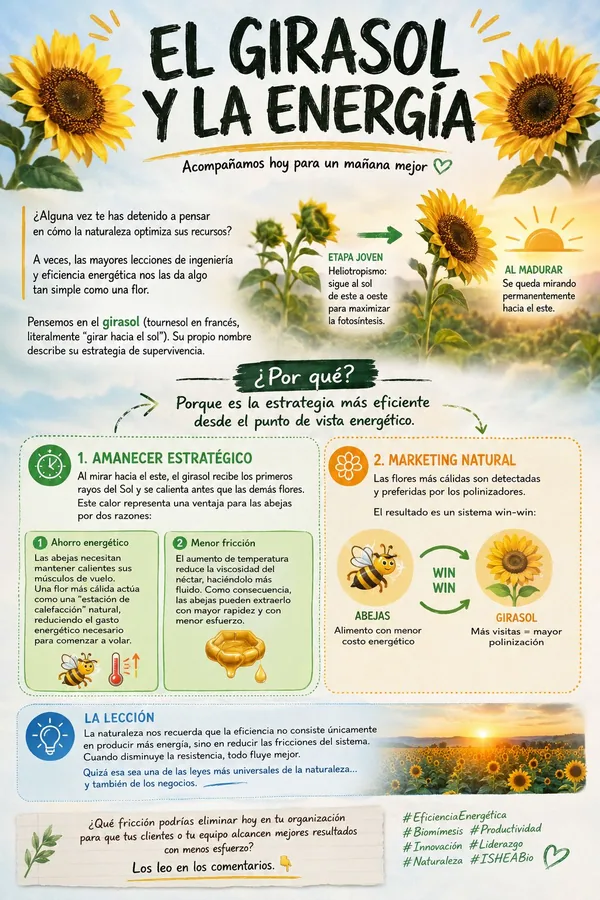
The Sunflower and Energy
How nature optimises its resources: the sunflower turns its geometry into a lesson in engineering and energy efficiency that human technology is still trying to match.
OSF-COG-003 · Collective cognition
ICSD: cognitive state dynamics (in preparation)
A repository in preparation for ICSD, the cognitive state dynamics model; it opens the space where the materials of the EICI + TACC framework will be deposited as the research advances.