

Collective cognition · NOTA-COG-011
Del fondo del mar a la Luna
🌊 Del fondo del mar a la Luna 🌙 El Tratado de los High Seas ya es una realidad: un pacto histórico que limita la minería en aguas profundas y pone al planeta por encima de la explotación. 📎 High Seas…
Note — Short piece published openly. Thinking in progress, not a result.
Original piece in Spanish.
🌊 Del fondo del mar a la Luna 🌙
El Tratado de los High Seas ya es una realidad: un pacto histórico que limita la minería en aguas profundas y pone al planeta por encima de la explotación.
📎 High Seas treaty – FT
Al mismo tiempo, EE. UU. impulsa el primer reactor nuclear en la Luna para sostener misiones permanentes y abrir la era de la colonización espacial.
📎 NASA nuclear reactor on the Moon – People
De las profundidades del océano al polvo lunar, la humanidad confirma que estamos en el momentum de los grandes saltos:
Regular lo que nos destruye.
Conquistar lo que parecía imposible.
Descubrir más allá de los límites.
Con el modelo ISHEA queda claro: debemos dejar atrás la era de la recolección y la producción masiva. La tecnología no lo permitirá en el futuro inmediato. El próximo ciclo será de conocimiento, cooperación y expansión del bienestar humano.
🚀🌐 “In LA(N)D IA We Trust” — “Landing on the Moon, In AI We Trust”
#ISHEA #Futuro #HighSeas #Moon #InLA(N)DIAWeTrust
In the same room — Collective cognition
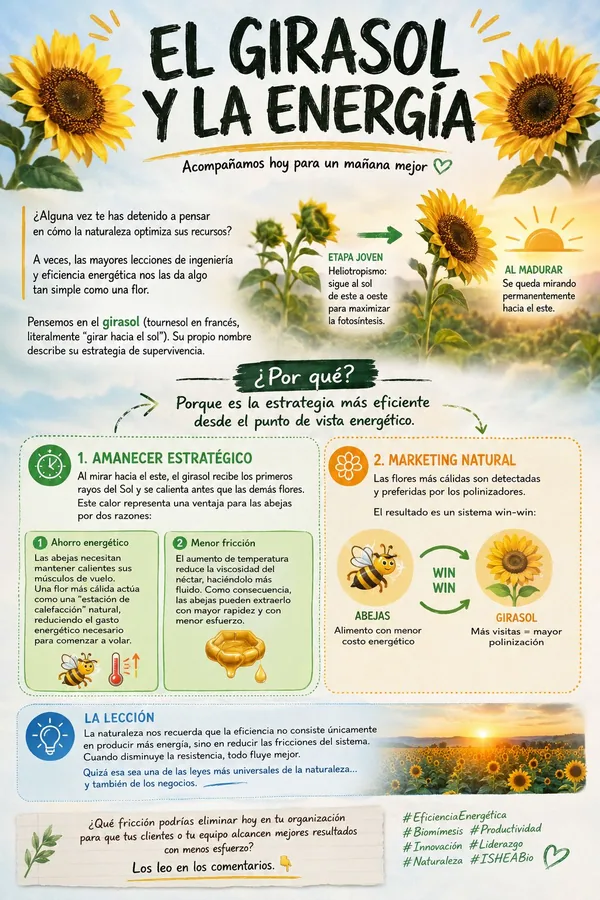
NOTA-COG-001 · Collective cognition
The sunflower and energy
A short note on how the sunflower solves the problem of capturing energy through geometry and rhythm, and why nature still reads as the most exacting manual of energy efficiency.
OSF-COG-002 · Collective cognition
ICSD: cognitive state dynamics (in preparation)
A repository in preparation for ICSD, the cognitive state dynamics model; it opens the space where the materials of the EICI + TACC framework will be deposited as the research advances.
OSF-COG-003 · Collective cognition
Cognitive State Dynamics Model (ICSD): a state-based view of innovation
A theory of innovation as a cognitive phase transition: joining the EICI criterion to the TACC cycle, it distinguishes four internal regimes an organization can occupy before it innovates.