

Collective cognition · OSF-COG-033
Experiment 7 – South Korea: burnout, working hours and the 52-hour reform
By Carlos J. Pérez Pulido · ISHEA Institute ·
A decade of burnout and suicide in South Korea, read through the 2018 labor reform and the IDCS index, tests how purpose, transmission and resilience hold up under sustained systemic stress.
Preprint — Manuscript deposited on OSF. Not peer-reviewed.
his dossier analyzes South Korea’s persistent burnout and high suicide rates (2015–2024), focusing on the 2018 labor reform (52-hour workweek). Using the Cognitive–Sanitary Deterioration Index (IDCS) as an analytical proxy, the study validates the ISHEA–KTR–TACC–IHC model by showing how Purpose (K), Transmission (T), and Resilience (R) interact with systemic stress and health outcomes.
🇰🇷 Exp. 07 – South Korea: Burnout, Working Hours.
Validation of the ISHEA–KTR–TACC–IHC Model with IDCS as Analytical Proxy
Author: Carlos Pérez Pulido
Period: 2015–2024 (focus 2022–2023)
Overview
South Korea presents one of the highest suicide rates in the OECD, combined with structural burnout due to long working hours and competitive social expectations. This dossier analyzes the 2018 labor reform (legal limit of 52 hours per week) and its impact on suicide rates, using the Cognitive–Sanitary Deterioration Index (IDCS) as an analytical proxy. The case tests how Purpose (K), Transmission (T), and Resilience (R) interact under systemic stress.
Key Insights
- K (Purpose): fragmented by rigid educational and labor competition.
- T (Transmission): cultural and institutional norms that still prioritize hierarchy and overwork, slowing the diffusion of healthier practices.
- R (Resilience): regulatory change (52h cap) improves baseline conditions, but without cultural adaptation and mental health support, resilience remains weak.
Data Highlights
- Suicide rate 2022: 25.2 per 100,000 (highest in OECD; leading cause of death in youth 10–39).
- Reported 2023: increase to 27.3 per 100,000.
- 2018 Reform: maximum working hours reduced from 68 → 52 (40 regular + 12 overtime).
- Work–life balance (OECD): South Korea ranks among the lowest.
Hypotheses
- H07.1: Structural burnout persists even after the 2018 reform.
- H07.2: Suicide rates remain high because K and T are not aligned with regulatory R.
- H07.3: IDCS captures the systemic tension, predicting suicide trends beyond labor metrics.
Results (Conceptual Validation)
- The 2018 reform reduced legal hours but did not significantly change suicide rates.
- IDCS remains positively correlated with suicide (β > 0 expected).
- Resilience (R) alone is insufficient; systemic improvement requires shared purpose (K) and healthier transmission (T) through institutions and culture.
Conclusion
South Korea validates the ISHEA model:
- Regulatory action on working hours (R) is necessary but insufficient.
- Without cultural transformation of purpose (K) and communication (T), systemic health outcomes (suicide rates) remain fragile.
- IDCS provides a useful analytical proxy for monitoring stress-related health outcomes at the population level.
Suggested Files
- exp07_korea_burnout_suicide.md
- exp07_korea_dataset.csv (suicide rates, IDCS, alcohol, tobacco, unemployment)
- exp07_korea_ITS.py (ITS/DiD analysis script)
- figures/exp07_suicide_trend.png (2015–2024 with 2018 reform marker)
- figures/exp07_oecd_wlb.png (OECD work–life balance ranking)
In the same room — Collective cognition
NOTA-COG-001 · Collective cognition
PISA 2025: what happens when learning too fast stops being learning?
A reading of the PISA 2025 results and the signal they send about performance across OECD countries: the suspicion that speeding up learning may end up hollowing it out.
NOTA-COG-002 · Collective cognition
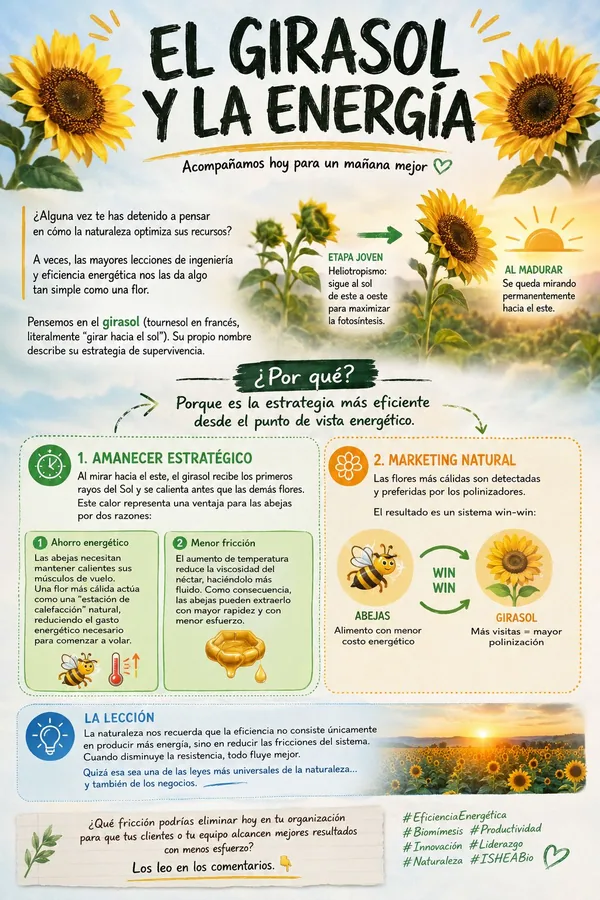
The Sunflower and Energy
How nature optimises its resources: the sunflower turns its geometry into a lesson in engineering and energy efficiency that human technology is still trying to match.
OSF-COG-003 · Collective cognition
ICSD: cognitive state dynamics (in preparation)
A repository in preparation for ICSD, the cognitive state dynamics model; it opens the space where the materials of the EICI + TACC framework will be deposited as the research advances.