

Economy 5.0 · NOTA-ECO-017
Transparency versus trust: the invisible variable in the Venezuela–U.S. deal
By Carlos J. Pérez Pulido · ISHEA Institute ·
An analysis of how incomplete information shapes trust between the parties to the Venezuela–United States energy deal, and why transparency ultimately decides what the agreement is worth.
Note — Short piece published openly. Thinking in progress, not a result.
Original piece in Spanish.
🚩 TRANSPARENCIA vs. TRUST: LA VARIABLE INVISIBLE DEL ACUERDO VENEZUELA–EE. UU.
En un acuerdo:
LA INFORMACIÓN ES PODER.
¿QUÉ SABEMOS?
1️⃣ TRANSPARENCIA
La información es incompleta: anuncios, reportes e interpretaciones, pero no todo está confirmado.
2️⃣ TRUST | CONFIANZA
Trust no significa simplemente creer.
Significa decidir con información verificable, reglas claras y compromisos evaluables.
Sin transparencia no hay trust.
Y la confianza se traduce en seguridad jurídica.
3️⃣ HECHOS
El 9 de enero de 2026, Trump reunió en la Casa Blanca a ejecutivos petroleros para impulsar inversiones en Venezuela. ExxonMobil participó y luego señaló que aún no veía condiciones para regresar.
Meses después, el escenario ha cambiado.
El WSJ reporta una estructura que contempla una participación estadounidense del 35% en North American Blue Energy Partners y derechos preferenciales sobre parte de su producción.
Reuters señala que el Pentágono sostiene que su Office of Strategic Capital no toma participaciones accionarias, mientras reporta que la estructura podría utilizar warrants para generar esa participación.
Trump también anunció que el petróleo venezolano será utilizado para reponer la Strategic Petroleum Reserve (SPR) estadounidense.
Pero:
Sin contrato, no hay detalle.
4️⃣ LA ECUACIÓN
Venezuela posee enormes reservas, pero convertirlas en producción requiere:
CAPITAL + TECH + OPERATORS + INFRA + MARKET
EE. UU. tiene intereses energéticos y estratégicos en el hemisferio.
La conexión:
OIL → ENERGY SECURITY → STRATEGIC INTEREST
5️⃣ VISIÓN ISHEA
Si estos elementos convergen, Venezuela puede dejar de ser vista solo como un asset petrolero.
Puede representar también:
🛢️ Reservas estratégicas
⚓ Infraestructura crítica
🌎 Posición hemisférica
💰 Cash flow potencial
🔋 Seguridad energética
Pero aquí aparece lo verdaderamente importante:
#INTERDEPENDENCIA.
#Venezuela necesita capital, tecnología y mercados.
#EEUU necesita energía, seguridad y suministro estratégico.
Aquí está la oportunidad: transformar esa relación en poder de #negociación.
Logrando las condiciones bajo las cuales el recurso se convierte en valor.
Y ahí está la #llave.
6️⃣ CONCLUSIÓN | LA VARIABLE QUE DECIDE
La oportunidad está en convertir la interdependencia en valor compartido: una relación win–win.
Para ello:
TRANSPARENCY + TRUST + LEGAL SECURITY + CAPITAL + EXECUTION
El recurso puede estar bajo tierra; el poder está en las condiciones que permiten convertirlo en valor.
¿CÓMO SE DISEÑA LA EXIT STRATEGY?
ISHEA | Agosto 2026
📌 Quick view estratégico. La evaluación definitiva requiere contratos, estructura financiera y marco jurídico.
Fuentes: WSJ | Reuters | White House
"WSJ — estructura reportada del 35%" (https://reference-url-citation.invalid/0)
"Reuters — dudas sobre transparencia contractual" (https://reference-url-citation.invalid/1)
#Venezuela #EEUU #Petróleo #Geopolítica #Energía #EnergySecurity #NationalSecurity #Investment #ISHEA
In the same room — Economy 5.0

NOTA-ECO-001 · Economy 5.0
What if the variables we use to measure national success were completely backwards?
For decades, progress has been measured through GDP, productivity, growth and energy use. This piece argues those variables may be inverted and asks us to rethink what it means for a country to thrive.
NOTA-ECO-002 · Economy 5.0
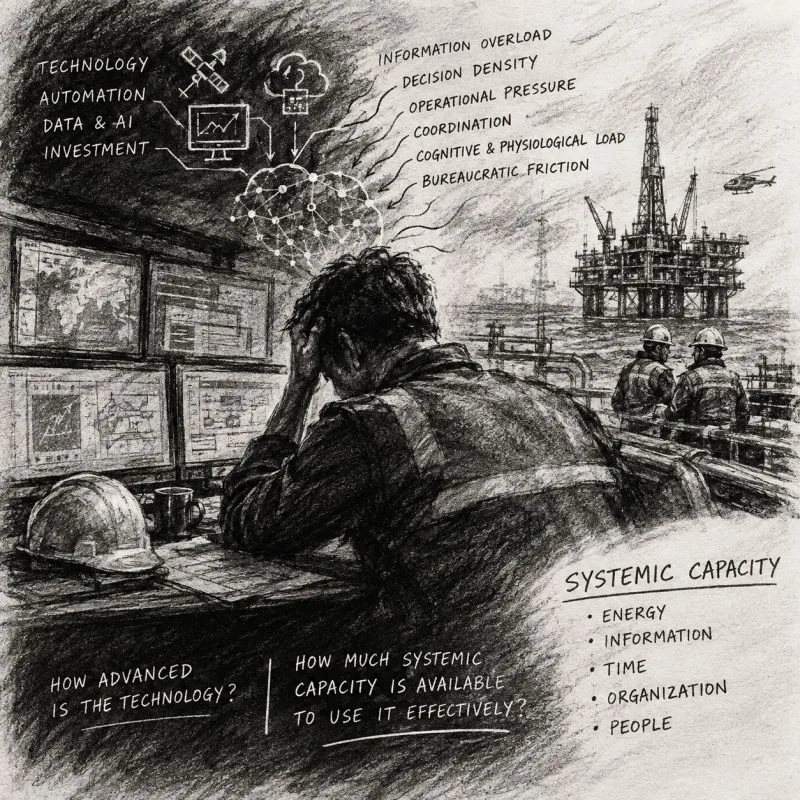
Why do highly engineered systems fail just when technology is most advanced?
In Oil & Gas and other complex operations, more technology does not guarantee better decisions: this piece examines systemic capacity, how much a system can absorb and turn into action under pressure.
NOTA-ECO-003 · Economy 5.0
Frankenstein and Oil: Why Does Venezuela Matter Geopolitically Again?
Third installment of the series: after tracing capital into AI and financial concentration, the next bottleneck comes into view, oil, and with it Venezuela returns to the geopolitical board.