

Economy 5.0 · NOTA-ECO-104
2025: Cards on the Table. SEC III
By Carlos J. Pérez Pulido · ISHEA Institute ·
Third instalment of the SEC series: 2025 opens amid a global realignment that redraws geopolitics, yet the pattern persists — wars, stalled diplomacy and authoritarian drift.
Note — Short piece published openly. Thinking in progress, not a result.
🌍 2025: Cards on the Table. SEC III
We enter 2025 amid a global realignment reshaping geopolitics.
Yet the pattern remains familiar: wars, stalled diplomacy, authoritarian drift, and recurring crises.
This context helps explain current U.S. strategic behavior.
🗺️ Global Landscape
Russia: Prolonged war, shrinking resources, little incentive for resolution with Ukraine.
Middle East: Persistent instability. U.S. strikes in Syria; ongoing violence in Gaza.
Africa: Widespread structural fragility.
Latin America: Under U.S. pressure; institutional weakness, criminal networks, external influence. Venezuela remains central.
Europe: Vocal but struggling to translate concern into autonomy. Washington prefers capable partners over dependence.
Asia: More pragmatic; regional actors align security and economic planning with U.S. priorities.
🐉 China: Power or Fragility?
Geopolitical shifts—alliances, supply chains, technology controls—aim to shape leadership for the next decade.
Question: Is China ready to dominate? Evidence shows structural fragility beneath operational strength.
📉 Structural Pressures
Real estate sector (≈30% GDP) unwinding post-Evergrande
Debt-driven investment returns declining
Domestic consumption insufficient
Demographic decline
Dependence on imported semiconductors
Energy vulnerabilities
Opaque public and local debt
Trajectory: prolonged stagnation, not dynamic growth.
⚠️ Strategic Signaling
Since mid-2010s, China shifted from development-focused messaging to reshaping the international order.
South China Sea militarization, Hong Kong policies, Xinjiang, Belt & Road—raise strategic concerns.
China now seen as a rule-setting competitor, not just a manufacturing hub.
🇪🇺 Europe & Strategic Ambiguity
European engagement—including Macron’s December 2025 visit—raises questions, not conclusions.
“Dialogue” and “economic rebalancing” reflect trade-security balancing, but ambiguity risks weakened transatlantic cohesion.
Whether this is mediation, miscalculation, or structural division remains open.
⚔️ Why the U.S. Acts Now
2025–2035 is a critical window.
China faces economic/demographic constraints but continues military modernization. Acting now preserves advantage; delay reduces it.
📌 Conclusion
U.S.: reorganizing for long-term competition
China: ambition with structural weakness
Europe: divided on strategy
This decade: decisive
Not ideology—strategic calculation.
Windows of advantage do not remain open indefinitely.
#VenezuelaPower #DonroePolicy
#Geopolitics #USForeignPolicy #China #GlobalStrategy #GreatPowerCompetition #IndoPacific #TransatlanticRelations #StrategicAnalysis #EmergingMarkets #DecisiveDecade #Europe #LatinAmerica #NationalSecurity #PolicyInsight #MacroTrends #Ishea #WreckItPolicy
In the same room — Economy 5.0

NOTA-ECO-001 · Economy 5.0
What if the variables we use to measure national success were completely backwards?
For decades, progress has been measured through GDP, productivity, growth and energy use. This piece argues those variables may be inverted and asks us to rethink what it means for a country to thrive.
NOTA-ECO-002 · Economy 5.0
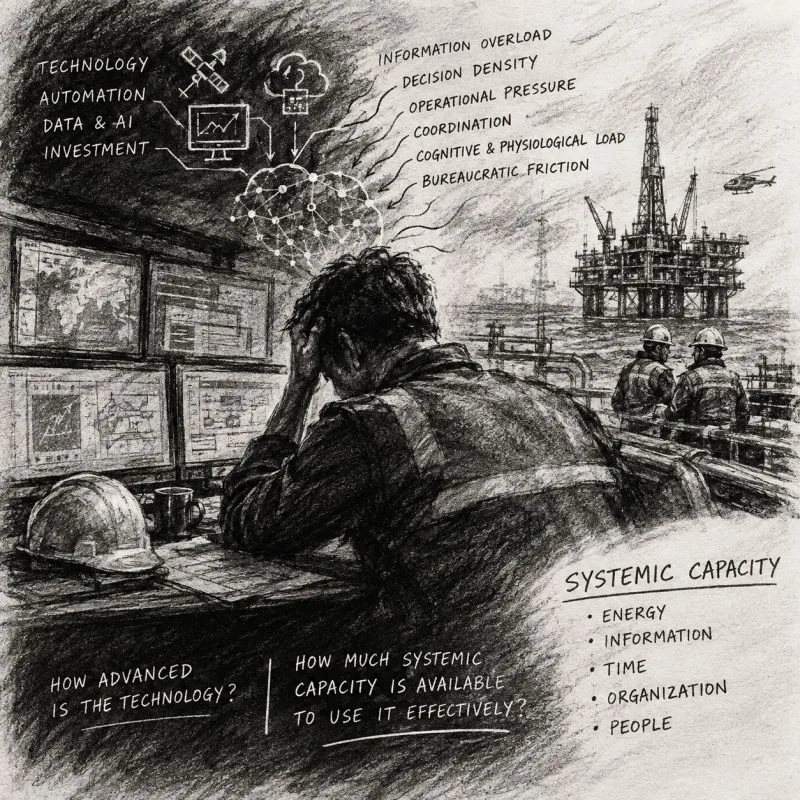
Why do highly engineered systems fail just when technology is most advanced?
In Oil & Gas and other complex operations, more technology does not guarantee better decisions: this piece examines systemic capacity, how much a system can absorb and turn into action under pressure.
NOTA-ECO-003 · Economy 5.0
Frankenstein and Oil: Why Does Venezuela Matter Geopolitically Again?
Third installment of the series: after tracing capital into AI and financial concentration, the next bottleneck comes into view, oil, and with it Venezuela returns to the geopolitical board.